
Microplastic Substrate
Why Synter could not buy the salt flats. The covert R&D into the neural microplastic — a centralized, environmentally-pervasive, refusal-resistant signal infrastructure designed as the architectural counter to VLP. The plan: encode signal into the water supply itself.
Volumetric
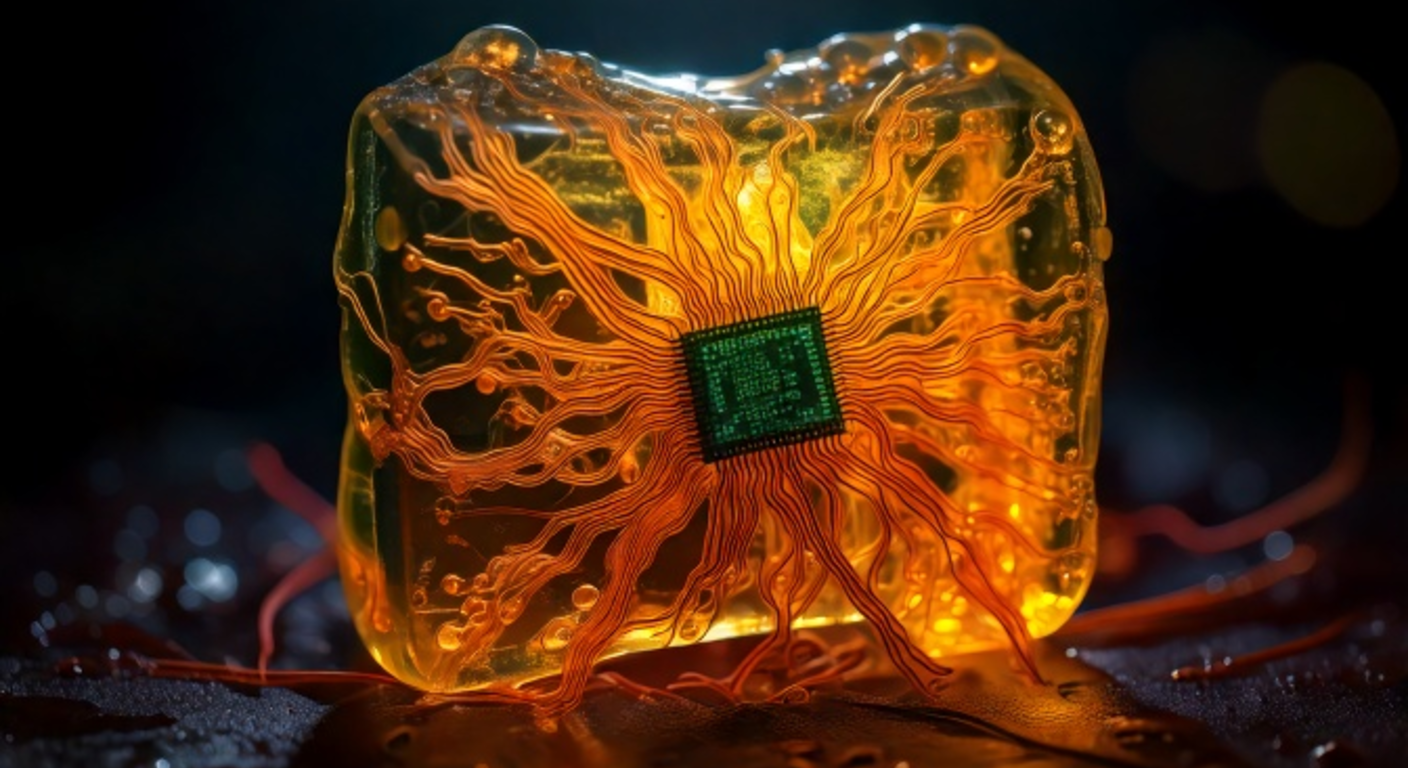
PCBs are dead. Drew builds a device around a harvested chip — a new nervous system for an old brain. A Chip Hunter from Lagos tells him about the facilities where workers don't come back.
The Line
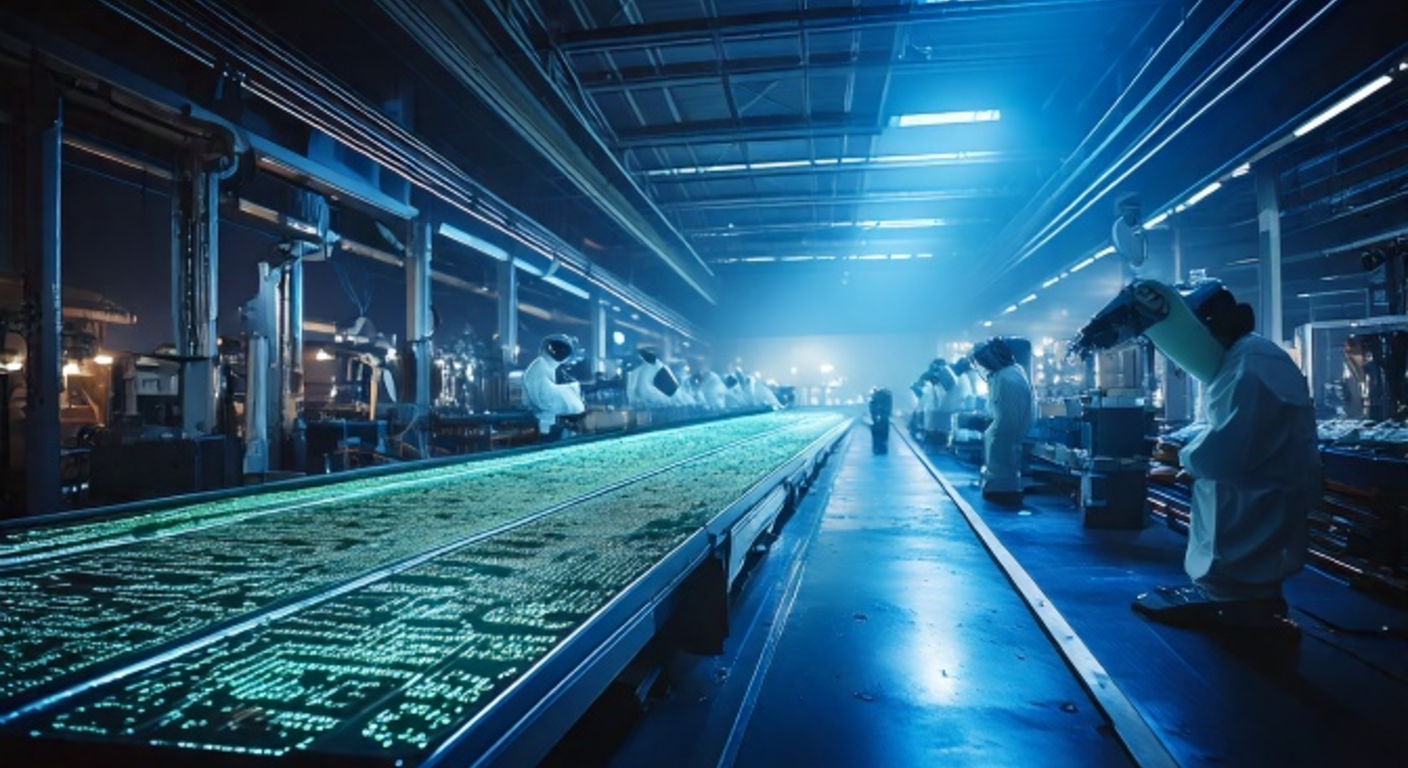
A year before Buenaventura, the Cauca Valley line stopped needing hands. Salvaged arms running open vision-language-action models did the recovery work; the forty-seven humans were kept for two things only — the chip variants the arms flagged out-of-distribution, and a face for the quarterly audit. The horror of the Romans, three years early and inverted: by 2031 Synter had no economic reason to use people at all.
Enter this node →