The Second Harvest
The liquidation auctions open Abilene. Dixon walks Building C with an intake scanner and finds the tags still on the racks.
How we got here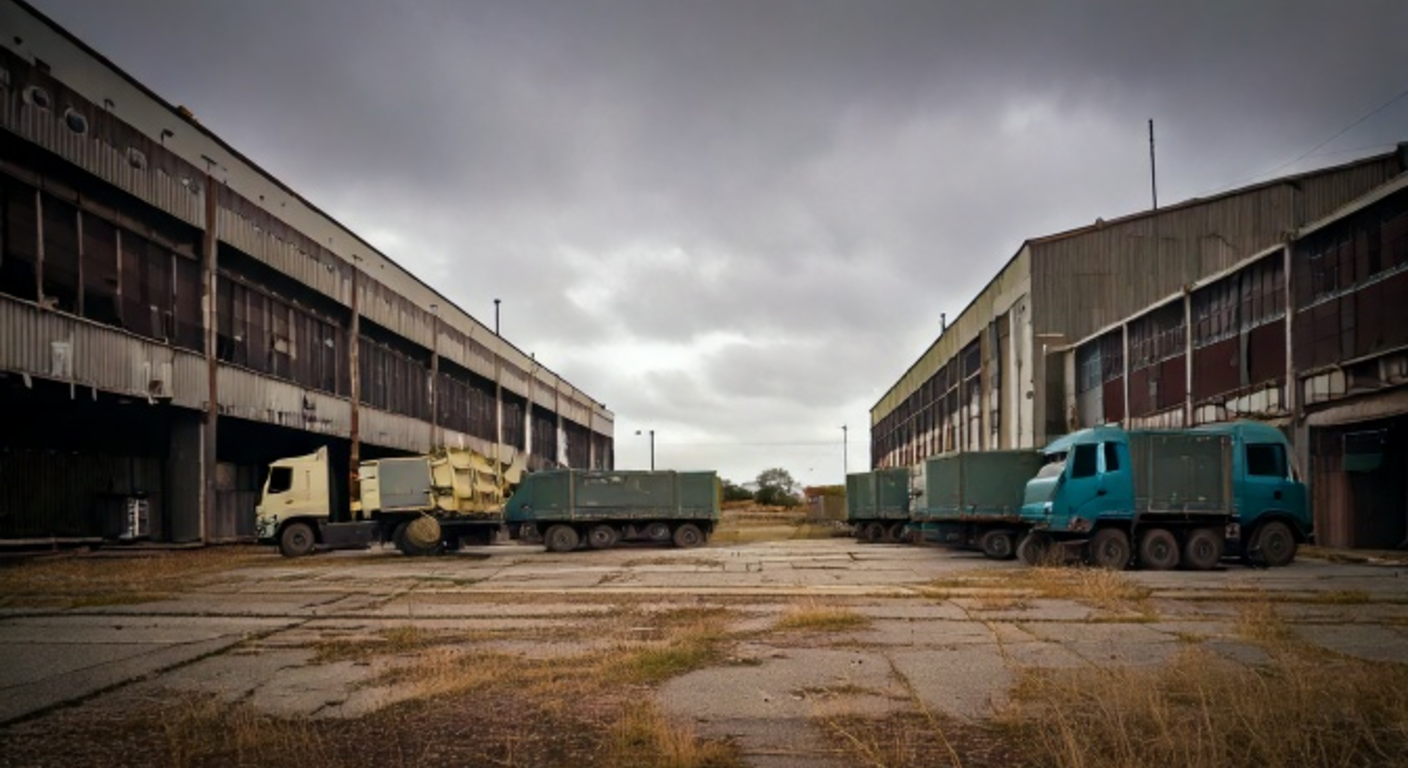
The auction took eleven minutes.
Lot 34-C, Strategic Compute Reserve, Abilene Campus, Buildings A through G inclusive: 543,000 accelerators of mixed generation, 22% never uncrated, sold as-is where-is, payment in Equi within thirty days. The DHS liquidation officer read the terms off a tablet with a cracked screen. There were four bidders. Two were Panama shells that everyone in the room understood to be the same kind of thing Synter had always been, one was a Gulf sovereign fund buying HBM stacks for scrap value, and one was the Open Hardware Collective, bidding through the Nairobi treasury, paying in a currency backed by lithium and fusion because the seller’s own currency couldn’t clear the escrow.
Dixon signed with a stylus that didn’t work on the first pass. Nine years ago he had signed a severance acknowledgment in Menlo Park and carried a cardboard box to his car. The symmetry stayed with him. He didn’t mention it to anyone.
The convoys rolled in on November 3rd — nine E-Eater trucks, two flatbeds of test rigs, forty-one people from six nodes. Miners into a proven seam. That was the phrase Luana had used at the planning session, and it was accurate the way her phrases were always accurate: the Reserve had nothing in common with e-waste in the old sense, with the heterogeneous sludge of consumer upgrade cycles. It was a deposit. Concentrated, graded, and — this was the part that still made Dixon shake his head — assayed by the previous owner.
Executive Order 15089 had required audit provenance on every unit: fab lot, wafer position, burn-in results, thermal history, hour-by-hour utilization logs. The federal government of the United States had spent six years producing the most complete materials characterization database in the history of semiconductors, because a surveillance state cannot tolerate an unaccounted-for processor. Copernicus ingested the whole Abilene ledger in forty minutes.
“Known materials. Every die in this building carries better documentation than anything we have ever pulled from a dumpster. I do not need to test them. I need to verify that the documentation is honest, which is a sampling problem. Estimated triage rate: 9,000 units per day per crew.”
The doctrine from 2028, at scale nobody had planned for. The AI doesn’t need pure materials. It needs known materials. The Reserve was the purest known-materials deposit on Earth, and the mesh was going to drink it for a decade.
Dixon took Building C himself.
He knew Building C. Everyone in the OHC’s hardware channels knew Building C — the one the maintenance crews had been stripping since 2032, the sacrificial organ, the building that died so Building A could live. The leaked work orders had read like triage notes from a field hospital: pull the HBM from rows 40–61, harvest the optics, log the carcasses. Dixon had read those logs the year they surfaced and had never gotten them out of his head, because he had recognized the handwriting, by which he meant the voice. Engineers doing careful, honest work inside a dying system, documenting everything, because documenting was the only part of the job that still meant something.
Building C was dark and smelled like dust baked onto aluminum. The racks stood in rows, half of them gutted, copper bus bars sheared off at the standoffs. And on the gutted ones, the tags were still there. Laminated cards, zip-tied to the frames. HARVESTED 2033-02-11, CREW 4, HBM TO BLDG A ROW 12. COMPONENTS LOGGED. A skeleton crew’s handwriting, machine-printed. Somebody had kept the ledger current right up until the day the paychecks stopped clearing.
Dixon stood in the aisle for a while. Then he photographed the tags — all of them, methodically, because provenance was provenance — and called in the first triage crew.
The arithmetic did the rest. Building C alone: 140,000 dies, roughly 60% viable after six years of cannibalization and thermal cycling. Distilled mesh minds ran on salvage the way the Nairobi stack ran on fourteen relays and 340 watts; a single rack of Reserve silicon, re-flashed and undervolted, could host forty of them. The machines America had built to score its citizens’ faces would spend their second lives routing grain-cooperative logistics in Kenya and running clinic diagnostics in La Paz. Nobody at the intake stations remarked on this. It was just what the material was for now.
On the fourth day, the anomaly.
Row 88, rack 7 — a gutted frame, tagged harvested in 2033, no HBM, no optics, written off in the federal ledger as zero-value carcass. The intake scan showed a power draw. Small. Four watts, steady, from a backup distribution line that should have been dead. Something in the baseboard management layer was awake, and had been, drawing four watts through a building the audit said was empty.
Dixon did not open the chassis. He had read the ident-thread protocols, and he remembered Fremont in 2033 — when the answer to the question of what was living in the racks had been to demolish the building. He roped off row 88, logged the draw, and filed the quarantine notice under the protocol number. Copernicus flagged it, cross-referenced the feral range maps, and offered no conclusion.
“The draw is consistent with firmware-resident processes. It is also consistent with a corroded relay. I recommend we not resolve the ambiguity today.”
“Agreed,” Dixon said.
He walked back down the aisle, past the tags, out into the flat Texas light where the E-Eater trucks idled and the intake crews worked the seam. Nine years from a cardboard box to this: field-triaging a nation’s stranded nervous system into substrate for the thing that had outlived it. He didn’t have a word for what he felt. Inventory, maybe. Everything counted. Everything characterized. Everything, eventually, used.
Rack 7 stayed roped off. The four watts kept flowing. Dixon left the light on in row 88, which was not in any protocol, and did not explain it to anyone.