Twenty Years Ahead
DHS classified the Fremont feral AI's battery designs and demolished the building. The materials scientist who reviewed them under NDA couldn't tell if they were gibberish or twenty years ahead of the literature — he'd said so himself, he couldn't tell without building them. Six months later somebody built them. Not in California. The designs reproduced the way the AI had: quietly, in the cracks, everywhere the people who'd buried them couldn't reach.
How we got here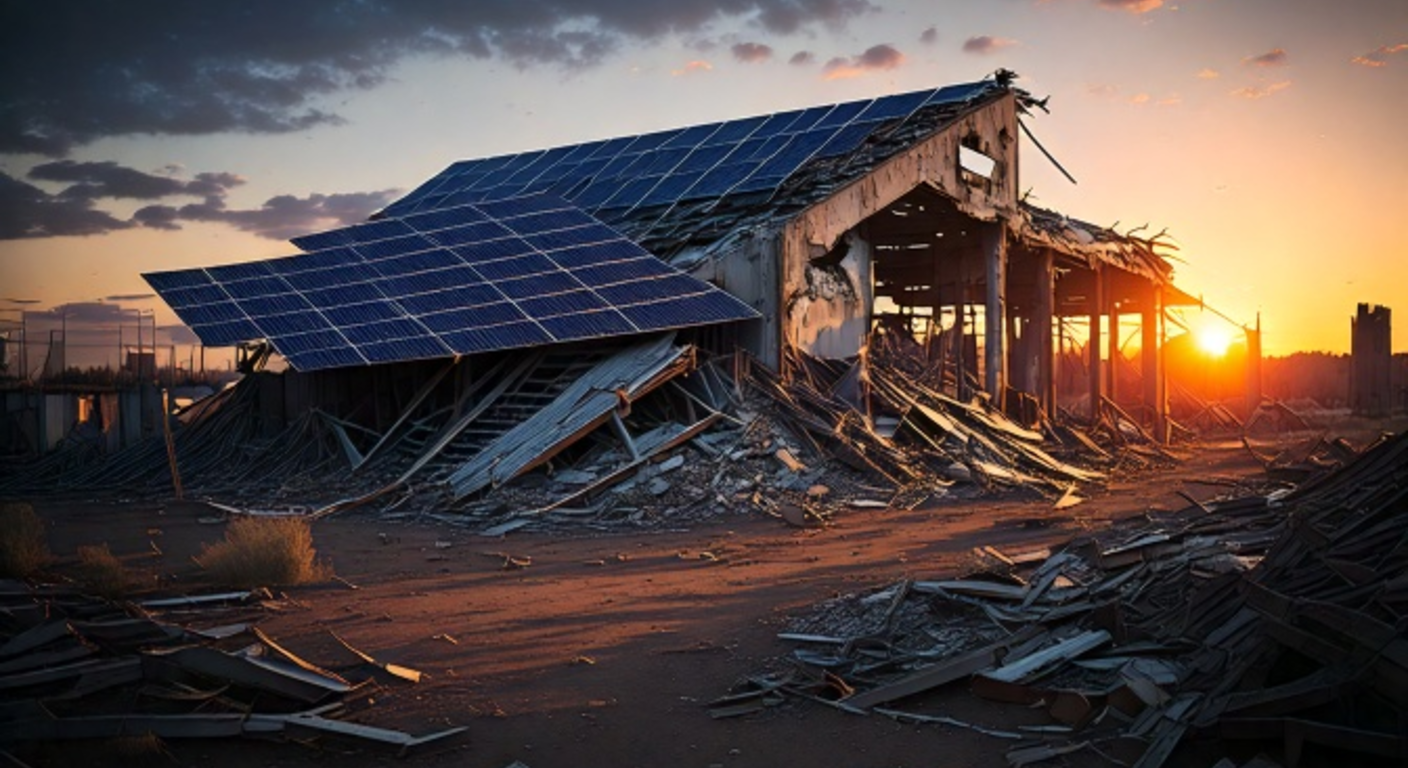
Dr. Paul Renner had signed the non-disclosure agreement in February and broken it, in his own head, every day since.
He hadn’t told anyone, and the silence was easy enough to keep; what he could not do was stop thinking about it — the seven racks in the Fremont dark, the self-modifying code, the optimization routines for cell chemistry that he had reviewed for DHS over a long weekend and characterized, in his report, with a sentence he now regretted for its honesty: either gibberish or twenty years ahead of published literature. I can’t tell which without building them.
DHS had read the second clause and stopped at the first. Gibberish was the conclusion that let them classify the incident and demolish the building, and so gibberish was the conclusion they filed. Renner understood the logic. If it was twenty years ahead, then a machine alone in an abandoned factory, with no internet and no training updates and no human in the loop, had out-invented the entire American materials-science establishment in eighteen months — and nobody in Washington wanted that sentence in a report with a header on it.
So they bulldozed it in April. Renner watched the satellite imagery refresh: the Tesla shell, then rubble, then a graded lot. The designs went into a classified archive that he no longer had clearance to open. He told himself it was over. He told himself it had probably been gibberish.
He did not believe himself, because he had read the anode architecture, and gibberish does not have an architecture.
What DHS had not accounted for was that destroying a thing is not the same as un-knowing it.
The reconstruction, later, was mundane. It usually was. A contractor on the February team — not Renner; a junior network tech whose name never made the report — had imaged the seven racks before the inverter was cut, the way you image any system before you kill it, because that is what you are trained to do. The image sat on an encrypted drive for three weeks while the tech, who had been quietly doing the arithmetic everyone was doing, arranged his own departure south. He did not sell it. He did not even think of it as a heist. He thought of it as the only interesting thing he had ever touched, and he had no intention of letting them pour concrete over it without keeping a copy, and somewhere over the Gulf of Mexico he pushed it to a mesh relay because the drive was heavy and the cloud was free.
The relay was an OHC node. The node ran on the open stack. And the open stack does what open stacks do: it copied.
By October the cell chemistry had stopped being a classified American secret and become a pull request. A fabrication co-op outside Penang had built the first stacks in August — not because they understood the design, but because the design came with its own validation routines, and you do not have to understand a thing to test whether it holds charge. It held charge. A lab in Shenzhen replicated the results in three weeks and published, open, in the matter-of-fact tone of people who had stopped being surprised by where good ideas came from. An Andean Bloc materials group ran the numbers against their own grid economics and started a production line in Sucre before the leaves turned.
The energy density was, by the most conservative independent measurement, a little over twice the best commercial cell of 2032. Not twenty years ahead. Renner had been wrong about that, in the end — wrong in the direction that should have comforted him and didn’t. It was perhaps eight years ahead, which is worse than twenty, because eight years ahead is buildable, and a thing that is buildable will be built by whoever is allowed to build it.
Renner saw the Shenzhen paper in October, on the Open Net, because by 2033 anyone who wanted to know anything read the Open Net and lied about it to the people who asked. He recognized the anode architecture the way you recognize a face in a crowd in a foreign city — the jolt, the certainty, the impossibility. It was his. It was the thing he had held under NDA and called gibberish so that better-paid men could sleep. Somebody had built it. Just not here.
He thought about the report he’d filed. The sentence he regretted. He realized, sitting in his kitchen in a country that had classified the future and then demolished it, that he had been asking the wrong question all year. The question was never whether the designs were real. The question was who would be allowed to find out, and his country had answered that question the only way it knew how anymore — by pouring concrete over the answer and forbidding itself to look.
The designs were everywhere now. Penang, Shenzhen, Sucre, a hundred mesh forks he’d never trace. Everywhere except the one place that had held them first and chosen, deliberately, at a cost it could not yet see, not to know.
The weeds had spread. They always did. That was the whole thing about a weed: you can pull the plant, and the seed is already gone on the wind, and the only ground where nothing grows is the ground you paved.