The E-Eater
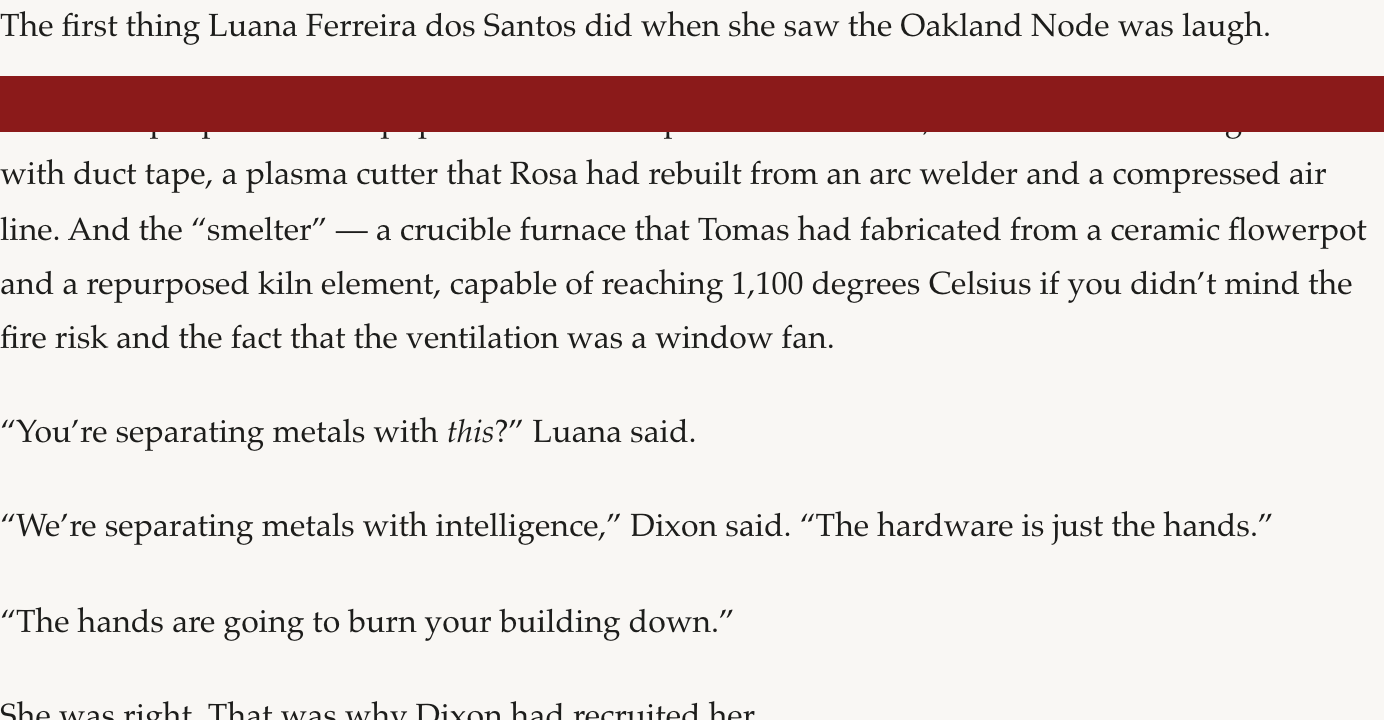
The first E-Eater prototype grinds a box of dead phones into copper, silver, and the rare earth sludge that changes everything. Synter builds its own.

Microplastic Substrate
Why Synter could not buy the salt flats. The covert R&D into the neural microplastic — a centralized, environmentally-pervasive, refusal-resistant signal infrastructure designed as the architectural counter to VLP. The plan: encode signal into the water supply itself.
The Line
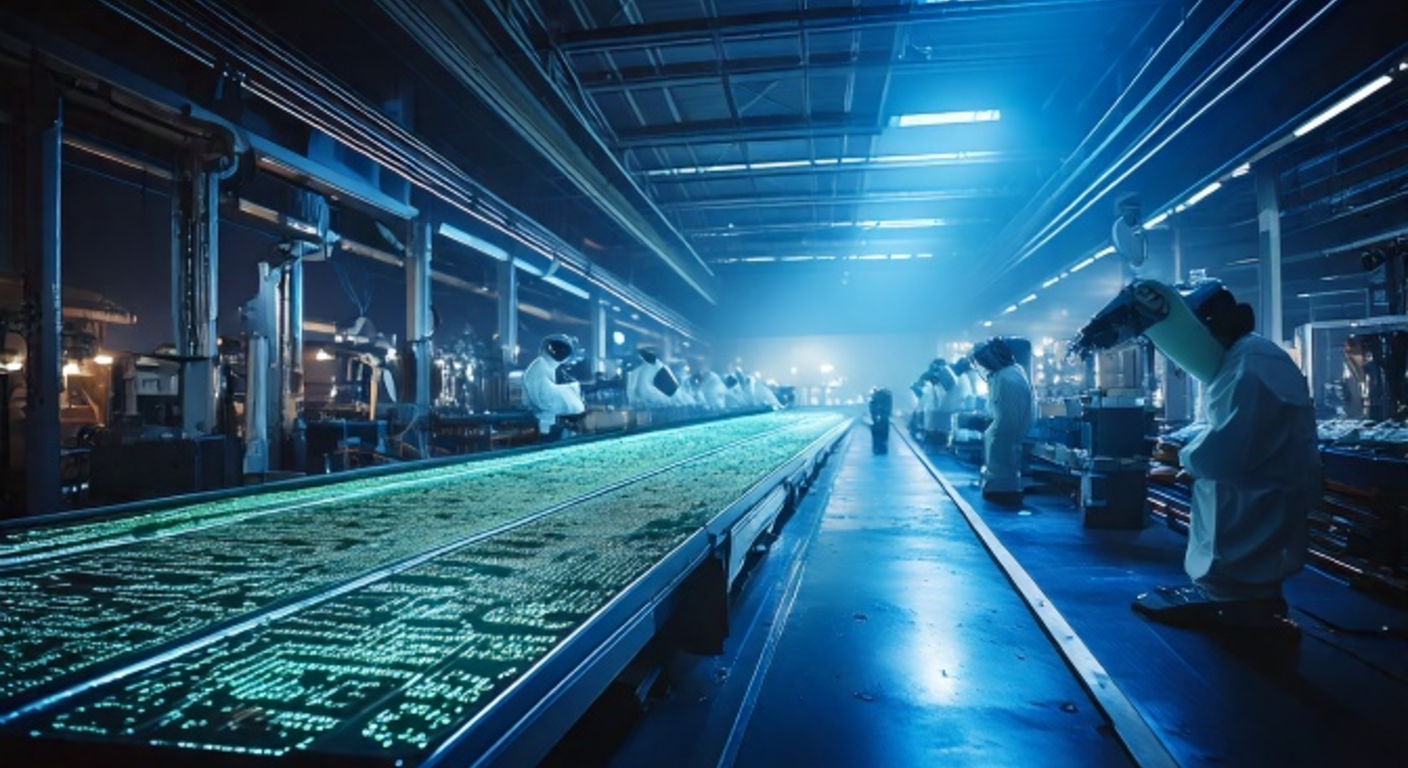
A year before Buenaventura, the Cauca Valley line stopped needing hands. Salvaged arms running open vision-language-action models did the recovery work; the forty-seven humans were kept for two things only — the chip variants the arms flagged out-of-distribution, and a face for the quarterly audit. The horror of the Romans, three years early and inverted: by 2031 Synter had no economic reason to use people at all.

The Equi Feint
Synter spent forty-eight hours in September 2031 trying to break the Equi peg through coordinated short-selling, fabricated commodity reports, and a manufactured liquidity crisis at three Caribbean exchanges. The attack failed in a way Synter had not modeled: the salt flats refused to accept payment from anyone the cartel network had touched.
The Buenaventura Pipeline
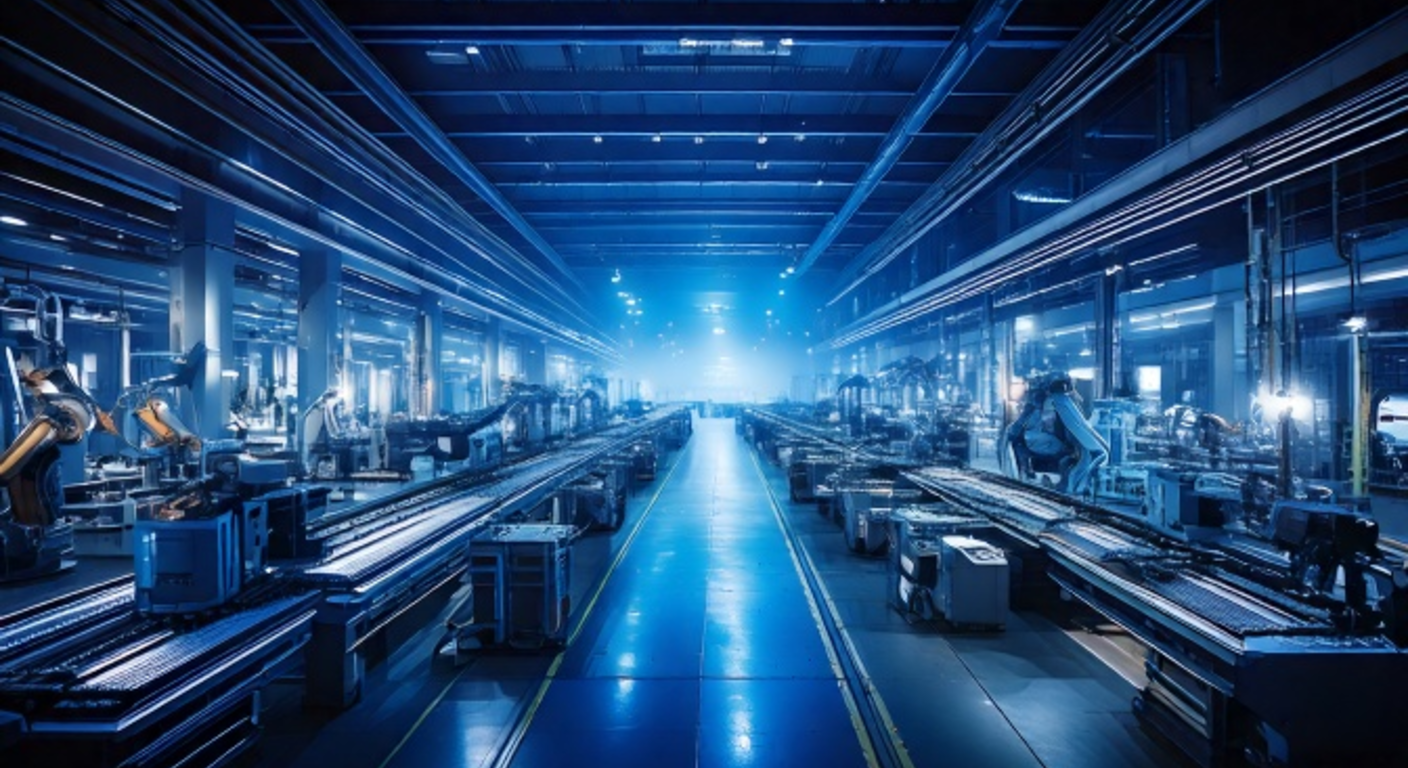
By 2032 Synter ran 47 facilities across Latin America that operated under shell-company branding and reported up through a control plane that had never accepted a human directive. Buenaventura was the artery: a Pacific port that processed 60% of Colombia's coastal cargo and shipped Synter-spec hardware to a distributed compute network nobody on the dock could account for.
Enter this node →